
Superior Powder Coating Solutions for HVAC and Cooling System Infrastructure
Why Powder Coating Matters for the HVAC Industry
In the demanding landscape of North American electrical and HVAC infrastructure, the choice of a finishing solution is not merely an aesthetic consideration—it is a critical engineering decision. Heating, Ventilation, and Air Conditioning (HVAC) systems represent a significant investment for commercial and industrial facilities. These systems are tasked with maintaining climate control in environments ranging from humid coastal regions to arid industrial clusters.
Powder coating has emerged as the industry standard for protecting these vital components. Unlike traditional finishing methods, powder coating provides a thick, uniform, and resilient barrier that guards against the primary threats to HVAC longevity: corrosion, UV degradation, and mechanical wear. For OEM engineers and procurement managers, selecting a high-quality powder coating like those offered by TIGER Coatings ensures that equipment maintains its structural integrity and functional performance over a service life that often spans decades.
Industry-Specific Context: Reimagining HVAC Component Finishing
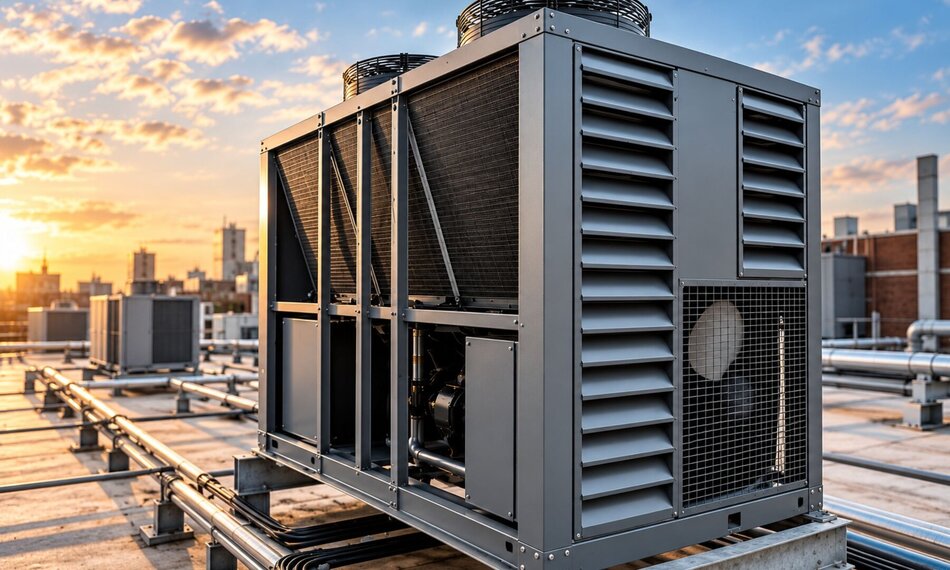
HVAC component finishing requires a unique balance of thermal stability and chemical resistance. Components such as condenser units, rooftop air handlers, and cooling tower enclosures are the front lines of a building's infrastructure. These units are often situated in exposed locations where they are vulnerable to the elements 24/7.
The industry is shifting away from liquid paints for environmental reasons. Modern HVAC manufacturing demands coatings that can be applied efficiently at high volumes while meeting strict regulatory standards for VOC emissions. Powder coating meets these needs perfectly, offering a ‘green’ finishing solution that does not compromise on the ruggedness required for industrial electrical and mechanical housings.
Why Finishing Matters in HVAC & Cooling System Manufacturing
The stakes of finishing in the HVAC sector are exceptionally high. A failure in the protective coating of a transformer housing or a switchgear enclosure can lead to service interruptions and significant financial loss.
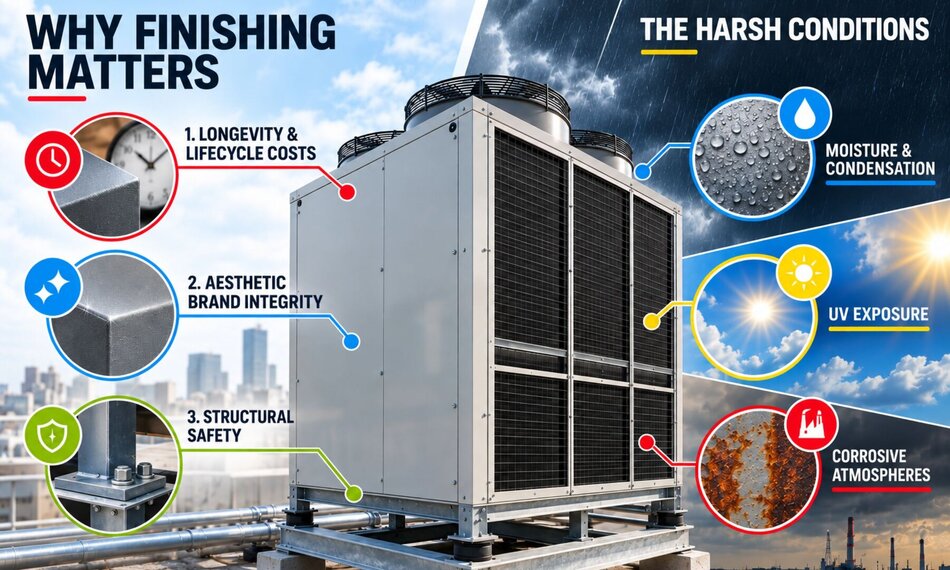
1. Longevity and Lifecycle Costs: HVAC units are expected to last 15 to 25 years. A superior powder coated finish prevents the onset of rust that can compromise thin-gauge metal panels, thereby extending the replacement cycle and lowering the total cost of ownership for the end-user.
2. Aesthetic Brand Integrity: For OEMs, the appearance of their equipment on a job site reflects their brand quality. Fading, chalking, or peeling paint suggests a low-quality product. Powder coatings provide superior color retention and gloss stability, ensuring the unit looks professional for years.
3. Structural Safety: Corrosion can weaken the mounting points and structural supports of heavy cooling components. By providing an airtight seal over joints and edges, powder coating maintains the mechanical strength of the assembly.
The Harsh Conditions HVAC Housings & Cooling Components Must Withstand
To understand why powder coating is the preferred solution, one must consider the environmental stressors these components face:
Moisture and Condensation: HVAC systems naturally generate moisture through condensation. Internal and external panels are frequently damp, creating a constant risk of oxidation if the coating has any porosity.
UV Exposure: Rooftop units are bombarded by ultraviolet radiation, which breaks down the chemical bonds in many liquid paints, leading to "chalking" and surface erosion. High-performance powders are formulated with UV-stable resins to resist this degradation.
Corrosive Atmospheres: In coastal or heavy industrial areas, salt spray and chemical pollutants accelerate corrosion. Powder coatings provide a dense, cross-linked molecular structure that acts as a superior barrier against ionic penetration.
Why Powder Coating is Ideal for HVAC & Cooling Applications
Powder coating cooling systems offers a range of technical advantages that liquid paint cannot match. First, the application process involves electrostatic spray, which ensures that the powder wraps around complex geometries, such as fan shrouds and perforated grilles, providing 360-degree protection.
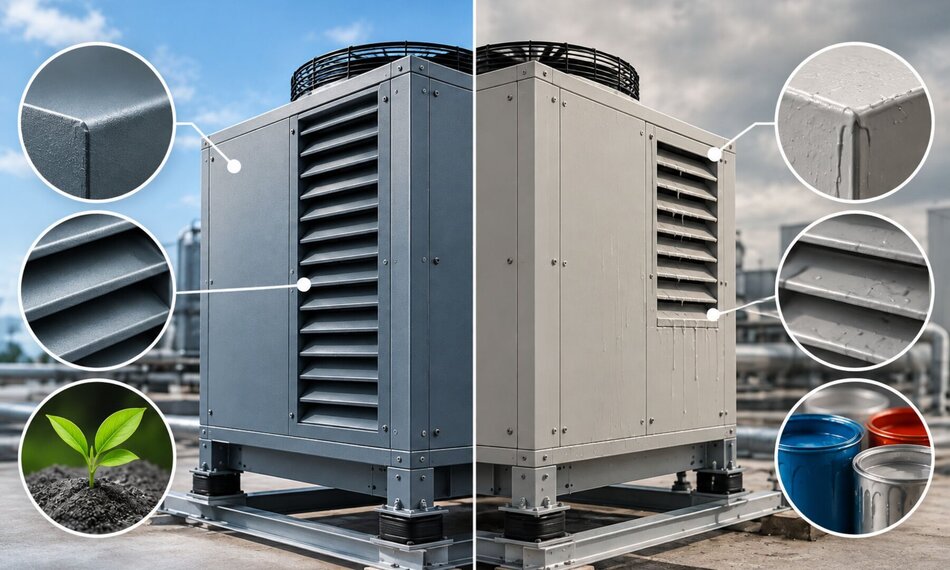
One of the most critical benefits is edge protection. Liquid coatings tend to pull away from sharp metal edges as they dry, leaving them thin and vulnerable. Powder coating, however, maintains a consistent film build across edges, which is typically where corrosion starts in HVAC enclosures. Additionally, the thermal durability of powder coatings ensures that the finish does not soften or discolor when exposed to the high operating temperatures of compressor compartments.
Comparison: Powder Coating vs. Liquid Paint for HVAC Components
When evaluating powder coating for metal enclosures against liquid alternatives, several performance gaps become clear:
Film Build
Powder coating typically achieves a thickness of 2.0 to 4.0 mils in a single pass, providing a substantial barrier. Liquid paint often requires multiple coats (primer, mid-coat, top-coat) to reach equivalent protection, increasing labor costs and production time.
Uniformity
Liquid paint is prone to runs, sags, and drips, especially on large, flat cabinet panels. Powder coating flows out evenly during the curing process, resulting in a flawless, orange-peel-free finish.
Environmental Impact
Liquid paints contain volatile organic compounds (VOCs) and hazardous air pollutants (HAPs). Powder coating is a dry process with zero VOCs, making it the superior choice for ISO 14001-certified manufacturers and those looking to reduce their carbon footprint.
Practical Considerations and HVAC Applications
Powder coating OEM manufacturing is utilized across a wide spectrum of HVAC and cooling hardware:
- Condenser and Evaporator Housings: Protecting the exterior shell from rain and sunlight.
- Electrical Control Cabinets: Ensuring the sensitive electronics inside switchgear and VFD housings remain dry and protected from dust.
- Data Center Cooling Units: Providing sleek, durable finishes for high-tech indoor environments where cleanliness and durability are paramount.
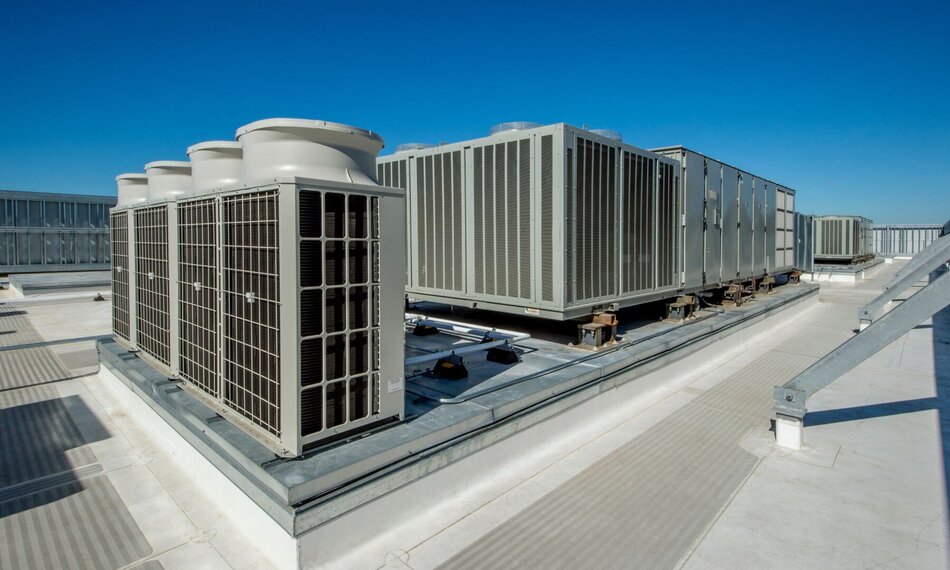
- Rooftop Units (RTUs): Extreme weather protection for the most exposed infrastructure components - Racks, braces and all other infrastructure components.
Summary: Choosing the Right Partner
For North American OEMs, successful HVAC component finishing depends on partnering with a supplier that understands the rigors of the field. TIGER Coatings offers a diverse portfolio of weather-resistant and anti-corrosive powders designed specifically for industrial enclosures and cooling systems. By prioritizing powder coating, manufacturers can deliver products that are more durable, more sustainable, and more reliable, ensuring that the critical electrical and cooling infrastructure of tomorrow remains protected today.
Specify the right system for your application
TIGER's technical team works with HVAC OEMs to develop and qualify powder coating systems for high-performance specialized industrial cooling systems.
Reach out to discuss your application, request samples, or get specification support.
Frequently Asked Questions: Powder Coating for HVACs & Cooling Systems
A: Powder coating provides a much thicker and more physically durable shield than standard liquid paints, which is essential for HVAC units exposed to high moisture and debris. By using an electrostatic application process, the powder wraps around every edge and corner of the metal enclosure, preventing the localized corrosion that typically leads to structural failure. This uniform barrier is highly resistant to impact, chemicals, and environmental stressors, effectively doubling the service life of many exposed components compared to untreated or poorly finished alternatives.
A: Yes, specifically formulated powder coatings combined with proper substrate pretreatment (like zinc-rich primers or chromium-free conversions) are designed to withstand thousands of hours in salt spray testing. For HVAC units located in coastal regions, TIGER Coatings offers high-performance polyester and epoxy-polyester blends that prevent salt ions from reaching the steel or aluminum substrate. This prevents the 'undercutting' of the film and minimizes the risk of bubbling and peeling in high-salinity air.
A: Powder coating is widely considered the most environmentally friendly finishing method available for industrial applications today because it contains virtually no Volatile Organic Compounds (VOCs). Unlike liquid paint, which requires solvents that evaporate into the atmosphere, powder is a dry material that produces no hazardous waste during application. Additionally, up to 98% of the overspray can be captured and recycled back into the system, significantly reducing material waste and helping manufacturers meet green building and LEED-related manufacturing standards.
A: While the initial setup for powder coating may require specific equipment, the cost per unit is typically lower than liquid finishing due to the increased efficiency and reduced labor. Because powder coating achieves the desired thickness in a single coat, OEMs save on the time and energy required for multiple drying cycles associated with liquid primers and topcoats. Furthermore, the lack of VOC abatement requirements and the ability to reclaim overspray material results in a much more cost-effective production line for high-volume HVAC manufacturing.