
Powder Coatings for Transformers: Benefits, Uses & Standards
A transformer can operate reliably for years, but its exterior has to survive something the electrical design can't control: the environment around it.
Think rain, road salt, humidity, sunlight, and the occasional impact during shipping or installation. Left unprotected, those conditions can lead to corrosion and costly maintenance.
That's why the finish matters.
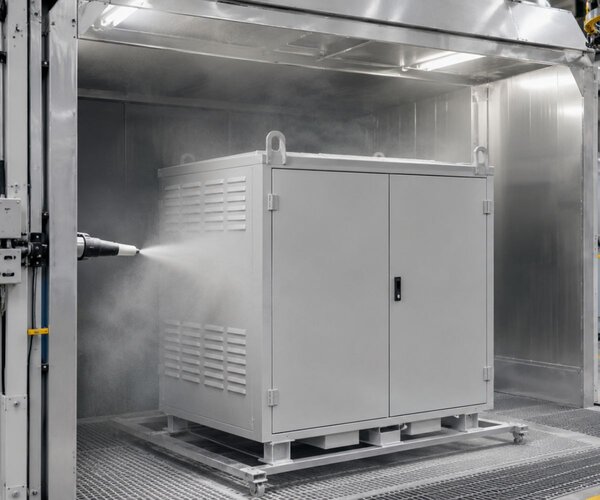
Powder coatings for transformers protect metal housings, cabinets, and other exterior components. Powder coating for transformer enclosures is particularly useful when a durable, repeatable factory-applied finish is needed. With the right preparation and application process, that layer helps resist corrosion, weathering, and wear.
But not every transformer needs the same coating. Let's look at what actually matters.
Why Do Transformers Need Protective Coatings?
Transformers serve utility networks, industrial facilities, renewable-energy sites, and commercial buildings, often with limited opportunities for maintenance.
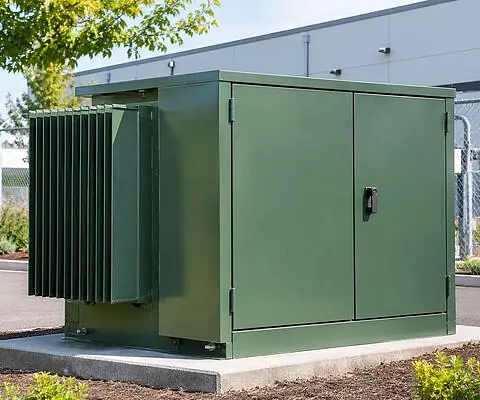
An outdoor pad-mounted transformer may sit beside a roadway where deicing salts collect. A unit near the coast deals with airborne salt and persistent moisture. Even an indoor dry-type transformer can experience abrasion, cleaning chemicals, and handling damage.
For metal components, poorly applied finishes can leave a path for moisture and oxygen to reach the metal. Corrosion can then spread beneath the coating, particularly around seams, corners, fasteners, and scratches.
The goal isn't simply to make the enclosure look good. It's to help keep the protective barrier intact, preserve the metal substrate, and reduce avoidable maintenance.
Need a Custom Coating Solution for Your Transformers?
From corrosion protection to outdoor durability and specialized performance requirements, TIGER can help develop a powder coating formulation tailored to your transformer components and manufacturing process.
Discuss Your Coating Requirements
Why Choose Powder Coatings for Transformers?
Powder coating is a solvent-free finishing process in which electrically charged powder is applied to a prepared metal surface, then heated to form a continuous cured film. For transformer manufacturers, it offers several practical advantages.
1. Corrosion Protection for Demanding Locations
A properly specified powder coating helps separate steel or aluminum from moisture and other environmental exposure. For tougher conditions, using the TIGER Shield® anti-corrosion system—a protective powder primer paired with a weatherable topcoat—adds an extra layer of defense.
That distinction matters. A transformer in a relatively sheltered installation has different needs from one exposed to coastal salt spray. Neither should be specified based on color alone.
2. Resistance to Chips, Scratches, and Handling Damage
Transformer cabinets aren't delicate display pieces. They're fabricated, transported, lifted, installed, and sometimes serviced in tight spaces.
Well-cured powders resist everyday abrasion and handling damage, although no finish is immune to impact.
3. Weatherability That Keeps the Finish Looking Consistent
UV exposure can cause some coatings to fade, chalk, or lose gloss. For outdoor transformer enclosures, polyester-based powder coatings—particularly super-durable grades—are often a strong choice because they're designed for exterior weathering.
Epoxy powders, on the other hand, can provide useful chemical resistance and corrosion protection but typically aren't the best unprotected exterior finish where appearance retention in sunlight matters.
The right chemistry makes a difference.
4. Efficient, Repeatable Manufacturing
For manufacturers coating batches of steel panels, doors, covers, or cabinets, automated electrostatic application can support consistent finishes and controlled film build. Recoverable overspray may also reduce material waste where the production setup allows it.
And because conventional powder coatings contain no added liquid solvent, they avoid many of the solvent-related emissions associated with traditional wet-paint application. Energy use for curing still belongs in the environmental calculation.
Where Is Powder Coating Used on Transformers?
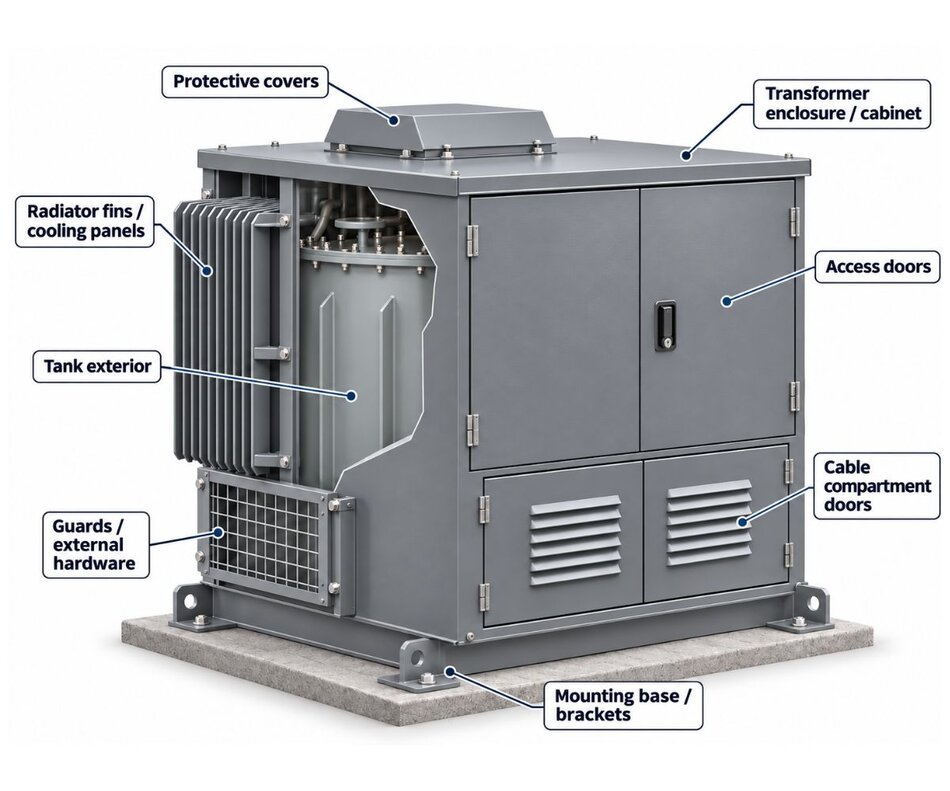
The clearest opportunities are on exterior metal surfaces and components, including:
- Pad-mounted transformer cabinets and doors: Weather-exposed surfaces that need corrosion resistance and consistent appearance.
- Dry-type transformer enclosures: Ventilated sheet-metal covers and panels that need a durable finish without blocking airflow.
- Transformer housings and protective covers: Fabricated steel or aluminum components exposed to handling and site conditions.
- Mounting brackets, guards, and external accessories: Parts vulnerable to scratches, moisture, and edge corrosion.
- Exterior surfaces of transformer tanks: A potential application where the manufacturer's design, coating process, operating conditions, and relevant specifications permit it.
One important limitation: a coating suitable for the exterior isn't automatically appropriate for internal transformer components, oil-contact surfaces, electrical insulation, or current-carrying connections. Those applications require their own material qualifications and electrical or chemical performance testing.
Likewise, powder coating generally needs a controlled oven cure. That makes coating fabricated parts before sensitive electrical components are assembled a key production consideration.
Choosing the Right Transformer Powder Coating System
Here's where specifications can get tricky. The best coating depends on where the transformer will operate, what the enclosure is made from, and how it's manufactured.
Start with the Exposure Environment
For mild indoor conditions, an appropriately selected single-coat system may be sufficient. For outdoor cabinets exposed to intense sunlight, rain, temperature cycling, or roadside contaminants, a weatherable polyester topcoat becomes more important.
Coastal and highly corrosive environments may call for a more robust system, such as a compatible powder primer and durable topcoat. TIGER's TIGER Shield approach, for example, uses a primer and topcoat system for protecting exposed steel.
Don't Underestimate Pretreatment
This step is easy to overlook. It shouldn't be.
Oil, dirt, weld residue, and existing corrosion can interfere with adhesion long before the transformer reaches a jobsite. Depending on the substrate and specification, proper pretreatment may involve cleaning, abrasive preparation, conversion coating, or a combination of methods.
Edges, welds, and water-trapping details deserve extra attention. A premium topcoat can't compensate for poor surface preparation.
Check Substrate, Cure, and Functional Details
Bare steel, galvanized steel, and aluminum don't all need identical pretreatment. Manufacturers should verify the recommended cure against the part's actual metal temperature and confirm that gaskets, seals, and other temperature-sensitive parts aren't exposed to an unsuitable process.
Grounding and bonding points may also need masking or special treatment. A decorative powder coat should never be assumed to provide an approved electrical insulation system, nor should it interfere with required electrical continuity.
Powder Coating vs. Liquid Paint for Transformer Enclosures
Is powder always better? Not necessarily.
Powder coating can be especially attractive for repeat-production metal parts because of its tough cured finish, efficient automated application, and reduced reliance on liquid solvents. It can also simplify finishing where the manufacturer has a suitable pretreatment line and oven.
Liquid coatings still have a place. Very large assemblies, heat-sensitive components, field repairs, or complex structures that cannot practically enter a cure oven may be better suited to a properly specified liquid system.
The smarter question is: Which finishing process meets the required performance while fitting the manufacturing workflow?
Work with TIGER on Coatings for Transformer Enclosures
Transformer coatings aren't one-size-fits-all. A cabinet near a coastal substation, a ventilated indoor enclosure, and a pad-mounted transformer installed beside a busy road each bring their own challenges.
TIGER Drylac® offers weatherable finishes, corrosion-protection systems, and technical support to help electrical-energy manufacturers select coatings suited to their substrates and production lines.
Explore TIGER's powder coatings for electrical energy or contact our team to discuss your transformer enclosure project.
Frequently Asked Questions About Transformer Coatings
Yes. Powder coatings are used on many exterior transformer housings, doors, cabinets, and related metal components. The specific parts and process must be compatible with the transformer's construction and operating requirements.
Weatherable polyester powder coatings, including super-durable formulations, are commonly considered for outdoor enclosures. More aggressive corrosion exposure may require an appropriately prepared substrate and a compatible primer-plus-topcoat system.
It helps reduce corrosion by creating a protective barrier, but it cannot guarantee a rust-free service life. Surface preparation, coating coverage, damage, exposure severity, and maintenance all affect performance.
Yes, if it is specified or applied without considering the equipment's design. Bonding points must retain their required electrical continuity, and coatings must not obstruct vents, cooling passages, or service interfaces.